
Collin County offers plenty of ways to fill a free afternoon, plan a family outing, enjoy a date night, or spend a weekend close to home. Communities including McKinney, Plano, Allen, and Frisco give residents access to nature preserves, museums, historic districts, major shopping destinations, live entertainment, and an impressive dining scene. The county has grown rapidly, yet many of its most enjoyable destinations also preserve the history and natural landscape that shaped North Texas. Whether you prefer hiking through native prairie, playing classic arcade games, browsing local boutiques, or sampling food from around the world, these seven Collin County attractions provide a useful introduction to the area.
Heard Natural Science Museum & Wildlife Sanctuary
The Heard Natural Science Museum & Wildlife Sanctuary in McKinney lets visitors spend time outdoors while learning about the plants, animals, geology, and ecosystems of North Texas. Founded in 1967, the nonprofit organization combines a natural science museum with a 289-acre wildlife sanctuary, creating an outing that works especially well for families, hikers, birders, and anyone interested in the region’s natural environment.
More than 6.5 miles of trails cross several distinct habitats, including Blackland Prairie, wetlands, bottomland forest, upland forest, and limestone areas. A visit can be as simple as choosing a trail and heading outside, or it can include time inside the museum examining fossils, minerals, Texas wildlife exhibits, and displays about prehistoric life. The sanctuary’s changing seasons also make repeat visits worthwhile. Wildflowers, birds, butterflies, and other wildlife can create a different experience depending on the time of year.
Families often appreciate the balance between activity and education. Children can see natural science exhibits indoors before heading onto the trails, while seasonal programs add additional opportunities throughout the year. The museum also offers bird walks, guided trails, night hikes, educational programs, and seasonal exhibits. Its Native Texas Butterfly House operates during part of the year, and other temporary programs provide additional reasons to return.
For prospective Collin County residents, the Heard also illustrates an appealing part of life in the area. Even within one of the fastest-growing parts of North Texas, residents can reach protected natural spaces without leaving the county.
View website for more info – https://www.heardmuseum.org/
Arbor Hills Nature Preserve
Plano’s Arbor Hills Nature Preserve offers 200 acres of open land devoted to walking, jogging, hiking, biking, and time outdoors. The preserve sits along Plano’s western edge and provides a more substantial trail experience than a typical community park, making it a popular destination for residents who want outdoor recreation without driving far from the city’s residential and commercial areas.
The scenery changes as trails pass through prairie, wooded sections, and areas near the creek. Paved routes make casual walks accessible to a wide range of visitors, while natural-surface trails offer more variety for those who want a longer or more active outing. Elevation changes add interest to the terrain, and an observation tower gives visitors another destination to work into their route. There are also areas where families can pause for a picnic or let children spend time at the playground.
Spring can be especially attractive when North Texas wildflowers appear across portions of the preserve. Warmer months bring plenty of shade along wooded trails, although morning and evening visits can be more comfortable during the height of summer. Fall temperatures also make longer walks appealing.
Arbor Hills works equally well for a planned workout and an unstructured afternoon outdoors. Some visitors arrive with running shoes and a specific trail in mind, while others come simply to walk, take photographs, watch for birds, or spend time away from traffic and commercial development.
Access to places like Arbor Hills adds another dimension to living in Plano and western Collin County. Residents can enjoy a heavily developed suburban area while still having preserved land available for hiking and outdoor recreation close to home.
View website for more info – https://www.plano.gov/nature-preserves-trails
National Videogame Museum
The National Videogame Museum in Frisco turns gaming history into an interactive experience that appeals to children, adults, collectors, and anyone who remembers spending hours with an old console or arcade cabinet. The museum focuses on video game development and culture, combining preserved hardware and memorabilia with exhibits visitors can actually play.
Walking through the museum gives visitors a clear look at how gaming has changed across generations. Displays include vintage consoles, early computers, classic games, themed spaces, and technology from different periods. Interactive exhibits such as Giant Pong and the Head to Head Wall make the experience more participatory, while a recreated 1980s bedroom places older gaming systems in the setting where many players first encountered them.
That combination can make the museum especially entertaining for families with children of different ages. Parents may recognize machines and consoles from childhood, while younger visitors get to try equipment that predates the technology they use today. The result is a shared experience that can lead to plenty of conversation, competition, and good-natured arguments about which generation had the best games.
The museum also provides an indoor option for hot summer afternoons, rainy days, or weekends when outdoor plans feel less appealing. Because many displays encourage interaction, it feels more active than a traditional museum visit.
For people considering a move to Collin County, attractions like the National Videogame Museum show the variety available across the area. Family entertainment here extends beyond movie theaters and shopping centers, with specialized cultural attractions that can turn an ordinary afternoon into something memorable.
View website for more info – https://nvmusa.org/

Heritage Farmstead Museum
Heritage Farmstead Museum in Plano provides a close look at the agricultural history that shaped this part of Texas long before modern neighborhoods, corporate campuses, tollways, and retail districts arrived. The museum occupies a historic farmstead centered around the 1891 Wilson House and includes 15 historic buildings, farm animals, exhibits, and a collection of more than 10,000 objects and archival materials related to life on the Blackland Prairie.
Visitors can walk through the grounds and see structures, tools, furnishings, and other objects associated with everyday life in North Texas during the late nineteenth and early twentieth centuries. Chickens, ducks, pigs, sheep, goats, and a donkey add another element, particularly for children. The animals are part of the site’s interpretation of agricultural life, giving families a practical way to talk about how farms once operated in the region.
The setting encourages visitors to take their time. Historic buildings, open grounds, agricultural displays, and the restored house create plenty to examine without making the outing feel overly formal. Educational signs and exhibits help explain what visitors are seeing, while special programs throughout the year can add demonstrations, children’s activities, and seasonal events.
The museum also gives newcomers valuable context for understanding Collin County. Plano is now associated with major employers, residential development, technology, shopping, and the broader Dallas-Fort Worth economy. The Farmstead shows an earlier version of the area, when Blackland Prairie agriculture played a central role in daily life.
For families, history enthusiasts, and residents who want to understand the place they call home, Heritage Farmstead Museum provides an approachable connection to Collin County’s agricultural past.
View website for more info – https://www.heritagefarmstead.org/
Legacy Hall
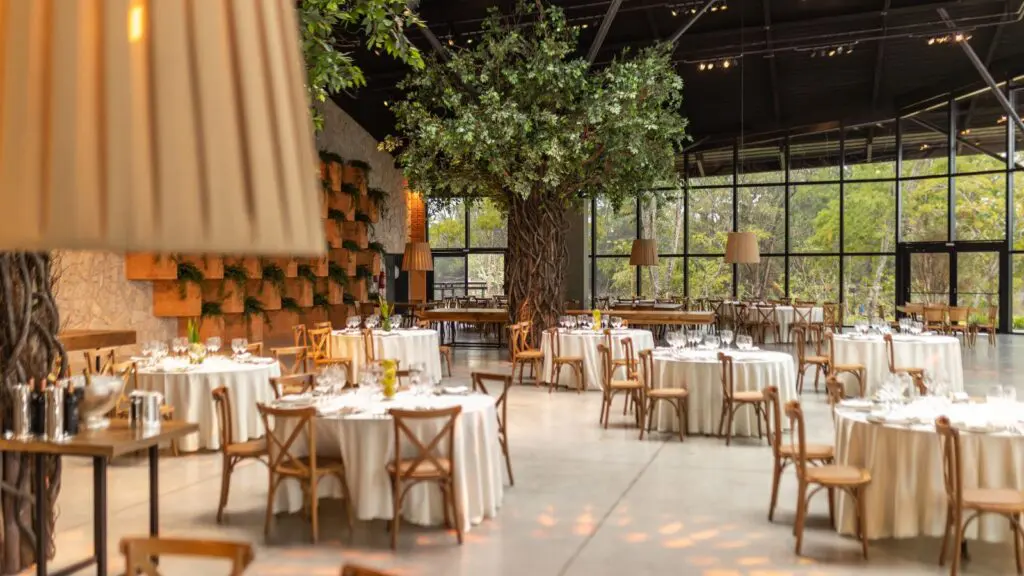
Legacy Hall in Plano combines dining and entertainment in a large, energetic setting at Legacy West. The three-level food hall brings together more than 20 curated eateries and bars, giving groups a practical solution when everyone wants something different. Visitors can choose among a broad range of cuisines and then gather at shared seating rather than committing the entire group to one restaurant.
That flexibility is a major part of the appeal. One person can order tacos while someone else chooses a burger, ramen, chicken, dessert, or another option from the hall. Couples can sample several foods during one visit, and families or groups of friends can spread out before meeting back at the table. The multi-level layout gives the building an active social atmosphere, especially in the evenings and on weekends.
Food is only part of the experience. The Lexus Box Garden adds an outdoor entertainment venue with a large stage and screen. Live music, karaoke, sports broadcasts, themed events, and other programming regularly extend a meal into a full evening. Covered terraces and outdoor seating also provide places to watch the activity below.
Legacy Hall fits naturally into a larger visit to Legacy West, where shops, restaurants, residences, offices, and hotels create a walkable mixed-use district. That makes it useful for everything from casual lunches to date nights and group gatherings.
For homebuyers considering western Plano or nearby areas of Collin County, Legacy Hall represents the convenience of having destination dining and entertainment close to residential neighborhoods. It is the type of place residents can use repeatedly, whether they are meeting friends after work or looking for something to do on a Saturday evening.
View website for more info- https://legacyfoodhall.com/
Allen Premium Outlets
Allen Premium Outlets gives shoppers access to more than 120 designer and name-brand outlet stores in one of Collin County’s largest retail destinations. Located near U.S. 75 and Stacy Road, the center attracts residents and visitors seeking clothing, shoes, accessories, athletic wear, home products, gifts, and designer merchandise from a wide range of brands.
The center’s size makes it easy to spend several hours browsing. Shoppers can move between major national brands and designer outlets, compare selections, grab food, and turn an ordinary shopping trip into an afternoon outing. Brands represented at the center include Nike, Coach, Tory Burch, Kate Spade New York, Michael Kors, Under Armor, and Polo Ralph Lauren, among many others.
Because the outlet center is outdoors, the experience changes with the weather and season. Pleasant spring and fall days are particularly comfortable for walking between stores, while summer visits may call for more frequent indoor breaks. Families can divide their time among different stores, and visitors shopping for holidays, school clothes, travel, or special occasions have a large selection available in one location.
The surrounding Stacy Road area also contains additional restaurants, retail, and entertainment, so a shopping trip can easily become part of a longer day in Allen. Its position near a major highway makes the center convenient for residents in McKinney, Plano, Fairview, Lucas, and other nearby communities.
For potential residents, Allen Premium Outlets is one example of the extensive retail access available throughout Collin County, where major shopping districts are spread among several cities rather than concentrated in one central location.
View website for more info – https://www.premiumoutlets.com/outlet/allen
Historic Downtown McKinney
Historic Downtown McKinney offers one of Collin County’s most distinctive combinations of shopping, dining, architecture, arts, and community events. The district has served as a center of local activity since the nineteenth century, and today its streets are lined with independently owned shops, restaurants, galleries, antique stores, boutiques, and other businesses. The City of McKinney describes the downtown commercial district as one of Texas’ oldest thriving historic downtowns, with more than 120 shops and more than two dozen restaurants.
A visit works best when there is time to walk. Storefronts and historic buildings encourage browsing, while restaurants and coffee shops provide easy places to stop between stores. Visitors may find clothing, home décor, gifts, antiques, art, specialty foods, and locally produced goods within a relatively compact area.
Downtown also functions as a cultural and social center. Festivals, public art, live entertainment, seasonal celebrations, and community gatherings regularly bring additional activity to the district. Restaurants range from casual lunch spots to options suited to an evening out, making it easy to return for different occasions.
The architecture gives the area a visual character that differs from newer commercial districts across North Texas. Preservation efforts have helped maintain historic buildings while allowing businesses, restaurants, and public spaces to continue evolving.
For people researching homes in Collin County, Downtown McKinney can also help explain why the county appeals to buyers who want modern suburban conveniences without giving up access to established community centers. It remains a place where residents can shop locally, meet friends for dinner, attend an event, or simply spend an afternoon walking through one of the county’s best-known historic areas.
View website for more info. https://www.mckinneytexas.org/567/Explore-Downtown
Living in Collin County
Collin County’s history stretches back well before the rapid suburban development that now defines much of the area. The county was created from Fannin County in 1846 and named for Collin McKinney, an early settler who helped draft and signed the Texas Declaration of Independence. McKinney became the county seat in 1848. Early residents relied heavily on agriculture, including wheat and corn production on the fertile Blackland Prairie. Railroads later influenced where communities developed and which settlements grew into lasting towns.
Today, life in Collin County can vary considerably depending on where someone chooses to live. Plano and parts of Frisco offer dense suburban development, employment centers, shopping districts, restaurants, and extensive amenities. McKinney combines rapidly expanding residential areas with an established historic center. Allen offers suburban neighborhoods with major retail and entertainment nearby. Communities such as Celina, Anna, Melissa, Princeton, Farmersville, and other parts of the county provide additional housing choices as development continues north and east. According to the U.S. Census Bureau, the county’s estimated population reached approximately 1.3 million in 2025, reflecting substantial growth since 2020.
Education is another important consideration for homebuyers. Collin County includes multiple public school districts, so school assignments depend on the specific property address, not the city name alone. Families researching a move should verify district and campus boundaries for any home they are considering. Higher education is available throughout the area through Collin College, which operates campuses and centers in communities including Allen, Celina, Farmersville, Frisco, McKinney, Plano, and Wylie.
The North Texas climate includes hot summers, relatively mild winters, and comfortable periods during spring and fall. Dallas-Fort Worth climate normals show average summer highs in the 90s, while winter daytime temperatures are generally much cooler but often remain moderate compared with colder parts of the country. Severe thunderstorms, hail, strong winds, and occasional winter weather can occur, so residents typically follow local forecasts during weather periods.
Transportation throughout most of Collin County remains heavily car-oriented. Major corridors include U.S. 75, the Dallas North Tollway, the President George Bush Turnpike, and the Sam Rayburn Tollway. The Sam Rayburn Tollway runs 26 miles and connects with U.S. 75 in Collin County. Plano also has DART rail access, including Red Line service, and the DART Silver Line, which opened in 2025, provides a regional rail connection from Plano toward Dallas-Fort Worth International Airport.
Together, these characteristics give buyers a wide range of choices. Buyers can prioritize established neighborhoods, newer construction, larger lots, walkable districts, shorter commutes, highly developed commercial areas, or communities with more open land. Understanding those differences is essential when deciding which part of Collin County best fits daily life.
Find Your Place in Collin County
Collin County gives homebuyers more than one version of North Texas living. Historic districts, major employment centers, family attractions, preserved natural areas, shopping, dining, higher education, and rapidly growing residential communities all sit within the same county. The best location depends on the lifestyle, commute, housing style, and community setting that matter most to you.
When you are ready to buy a home in Collin County, contact me. I can help you compare communities, understand neighborhood differences, and focus your home search on places that fit how you want to live.